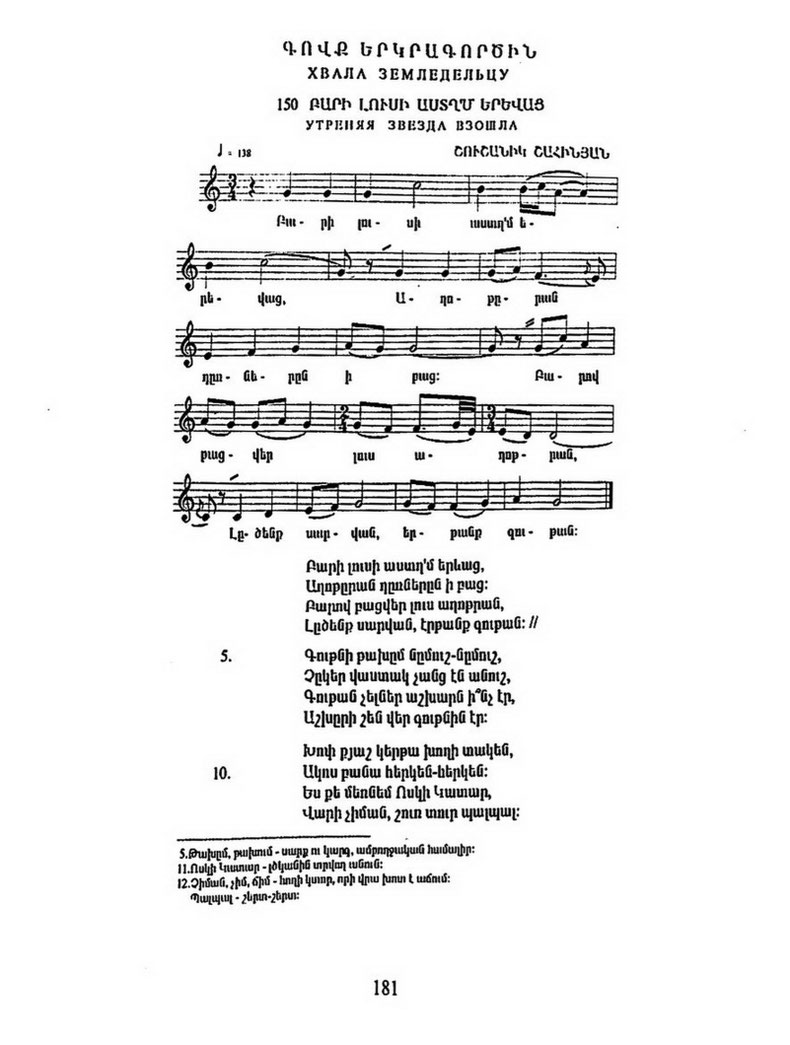
Gutani yerg / Bari Luso Astgh Yerevats (Armenian Folksong)
Գութանի երգ / Բարի լուսո աստղ երևաց
Gutani yerg – The Song of the Plow
Alternative title
Bari Luso Astgh Yerevats – The Good Morning Star Appeared
Here is my notation of the melody based on the YouTube recording by Hayrik Muradyan (for simplicity in C major instead of B major, as he sings it).
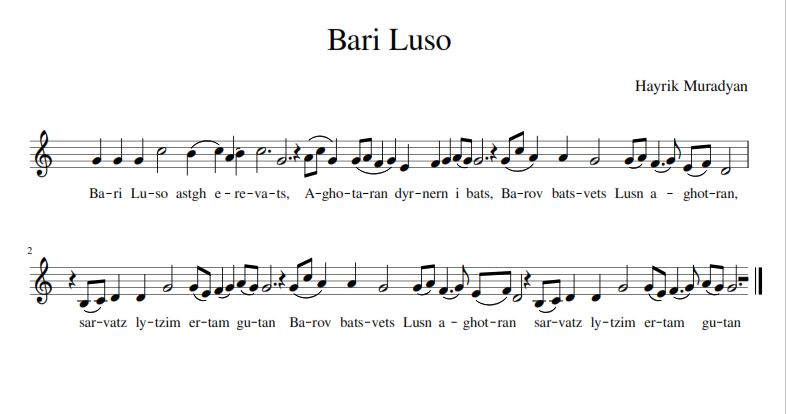
“Bari Luso” or “Gutani yerg” is one of the best-known songs from the repertoire of the great Armenian singer and ethnomusicologist Hayrik Muradyan (1905–1999).
The following explanation was given by Hayrik Muradyan himself to the musicologist Alina Pahlevanyan in the book “Hayreni yerger”:
“The song ‘Bari Luso Asthgh Yerevats’ originated in the 1860s in the province of Van, when, on the initiative of Mkrtich Khrimyan (Khrimyan Hayrik), the plow was introduced into agriculture in Vaspurakan for the first time. The song quickly spread to all settlements in the province of Van. We present it as I learned it in 1916 at the Armenian school of Van.”
Later, in a conversation about this song, H. Muradyan related the following:
“The song ‘Bari Luso Asthgh Yerevats’ originated at the monastery of Varaga. Father Khrimyan was the abbot there. He had founded a school whose students later fought throughout Vaspurakan in the liberation struggle. Under his guidance, a wonderful generation grew up. Father Khrimyan was different from most monks. He used to say: ‘A clergyman should live modestly, on a single bowl of tanapur (yogurt soup), so that he can use the church’s income for the defense of the homeland.’ During that time, while he was plowing the fields of the Varaga monastery with the plow handles, the boys—the monastery’s choirboys—were inspired and composed this song.”
The musicologist Alina Pahlevanyan rightly notes in the same book:
“‘Bari Luso Asthgh Yerevats’ is probably more a song about the plow than a work song performed during labor, like our traditional horovels.”
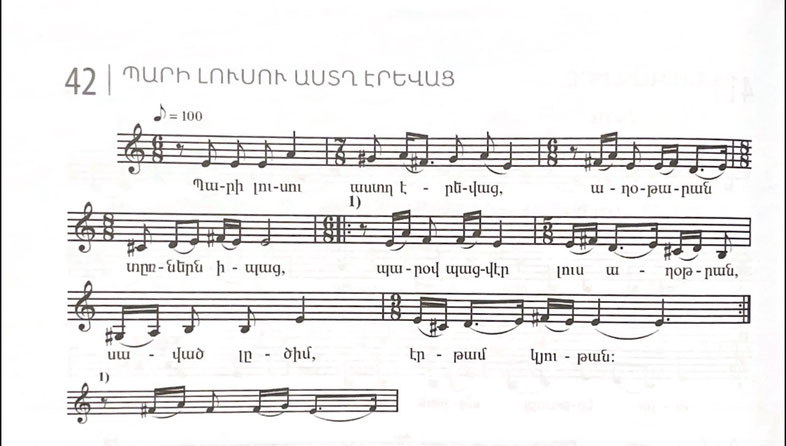
Here is the notation by Alina Pahlevanyan based on the singing of Hayrik Muradyan.
Source: the book “Hayreni yerger”.
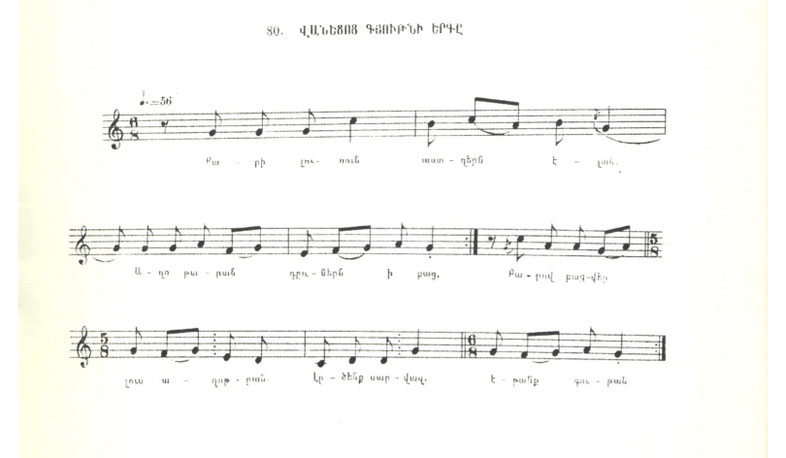
A simpler version of this song is “Vanetsots Gutani Yergy” (The Plow Song from Van), from Spiridon Melikyan, “Armenian Folk Songs and Dances”, Vol. 2, No. 80.
Here is another version that one can find in Mihran Toumajan's Armenian Folksongs Vol. 4 Nr. 150 which he notated of the singing of Shoushanik Shahinian.
The melody and the lyrics here are clearly different from Muradyan's version.